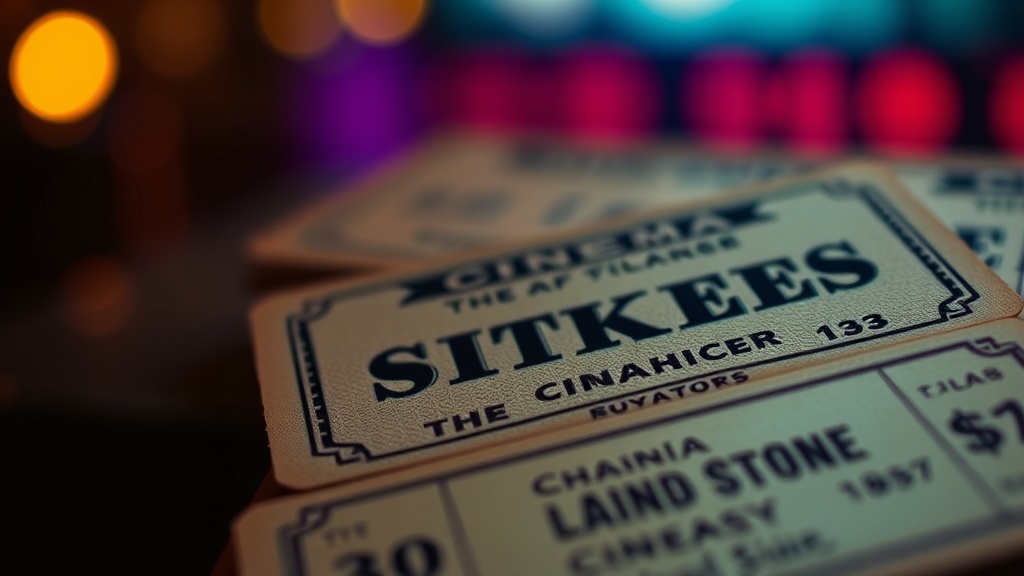
Authenticating Your Collection: A Discerning Look at Vintage Cinema Tickets

How Can You Tell If a Vintage Cinema Ticket Is Authentic?
Many assume that any old piece of ephemera from a bygone era carries significant monetary—or even historical—worth. With vintage cinema tickets, the truth is more nuanced. This guide explores the critical steps collectors must take to determine the authenticity and true significance of their paper treasures, ensuring that what you hold is a genuine slice of cinematic history and not just a well-aged piece of print.
The first hurdle for any serious collector is verifying authenticity. A common misconception suggests that age alone protects an item from replication, but skilled forgers have long mimicked antique paper goods. Recognizing a genuine vintage cinema ticket involves scrutinizing several key aspects: the paper, the printing, the ink, and the ticket’s overall condition and design characteristics.
Start with the paper itself. Vintage tickets, especially those predating the mid-20th century, often used different paper stocks than modern counterparts. Look for natural fibers, subtle variations in thickness, and—crucially—an absence of optical brighteners, which are common in contemporary paper and will glow under UV light. Early tickets might feel denser or have a slightly uneven texture. Any ticket that feels too smooth, flimsy, or uniformly bright white without the characteristic aging (tanning, foxing) of its era should raise a red flag.
Next, examine the printing process. Before widespread digital printing, tickets were typically produced using letterpress, lithography, or early offset printing. These methods leave distinct impressions. Letterpress, for instance, often creates a slight indentation where the ink pressed into the paper, a detail almost impossible to replicate perfectly with modern inkjet or laser printers. Look for crisp, well-defined edges on text and graphics, but also accept minor inconsistencies that were typical of older mechanical processes. Fuzzy edges or pixelation are clear indicators of modern reproduction.
Ink composition also provides clues. Vintage inks tend to have a flatter, less reflective finish than many modern inks. They also age differently, often showing slight fading or color shifts over decades. Be wary of tickets with unusually vibrant, glossy, or perfectly uniform colors, especially if they look ‘too new’ for their supposed age. Some very old tickets might even show signs of ink bleed, where the ink has subtly spread into the paper fibers—a characteristic often absent in counterfeits.
Finally, consider the design specifics. Does the theater name, film title, date, and price align with known historical records? Research local newspapers, theater archives, or online film databases for corroborating information. Anachronisms in typography, logos, or even seating layouts can expose a fake. Remember, genuine errors sometimes occur, but a consistent pattern of historical inaccuracies across multiple features is highly suspect. Tools like a jeweler’s loupe (10x magnification is usually sufficient) can help you inspect these fine details with precision.
What Features Distinguish a Valuable Cinema Ticket?
Once you are reasonably confident in a ticket’s authenticity, the next step is assessing its potential value. Not all authentic vintage tickets hold significant worth; rarity, historical significance, condition, and provenance all play substantial roles. It’s not just about age; it’s about the story the ticket tells and how unique that story is.
Rarity and scarcity are perhaps the most obvious drivers of value. A ticket to a highly anticipated film’s premiere, especially if it was a significant cultural event, will command more attention than a generic matinee ticket from the same year. Tickets for films that were groundbreaking, controversial, or had very limited initial runs often fetch higher prices. For example, a ticket to the 1939 premiere of Gone With the Wind or the 1977 opening of Star Wars holds immense collectible appeal due to their historical impact and the relative scarcity of surviving examples from such specific, high-profile events. Tickets from short-lived or historically significant movie palaces, particularly those that have since been demolished, also fall into this category of rarity.
Historical significance stretches beyond just film premieres. A ticket from a particular landmark event—a film shown during wartime, a special charity screening, or a ticket from an early experimental cinema—can be highly desirable. Consider tickets that might represent a ‘first’: the first showing of a sound film in a specific city, or a ticket to one of the earliest motion picture exhibitions. These items are not just film memorabilia; they are artifacts of social and technological history. The presence of unique markings, such as a celebrity's autograph (verifiable, of course), or a distinctive stamp from a long-gone venue, can also dramatically increase value.
Condition is king in collecting, and cinema tickets are no exception. A ticket in near-mint condition—crisp, clean, with sharp corners, no folds, tears, or significant discoloration—will always be worth considerably more than one that is heavily creased, stained, or torn. Professional grading services exist for paper collectibles, providing an objective assessment of condition. Even minor flaws can significantly impact value, so handle these items with extreme care. Think of it this way: a ticket that looks like it just came out of the box is far more appealing than one that appears to have been through a washing machine, regardless of its age.
Provenance, the documented history of ownership, can also add layers of value. A ticket accompanied by solid proof that it belonged to a famous film personality, attended a legendary screening, or was part of a renowned collection can achieve premium prices. While harder to establish for single tickets, any supporting documentation or verifiable backstory can elevate an item from a curious relic to a prized possession. Without provenance, a ticket’s story is often left to speculation, which limits its market appeal to serious collectors.
Always verify the details printed on the ticket with independent sources. A ticket touting a fictional film or a date that doesn't correspond with historical releases is—at best—a curiosity, and more likely, a modern fabrication. Cross-referencing details against authoritative film databases like the