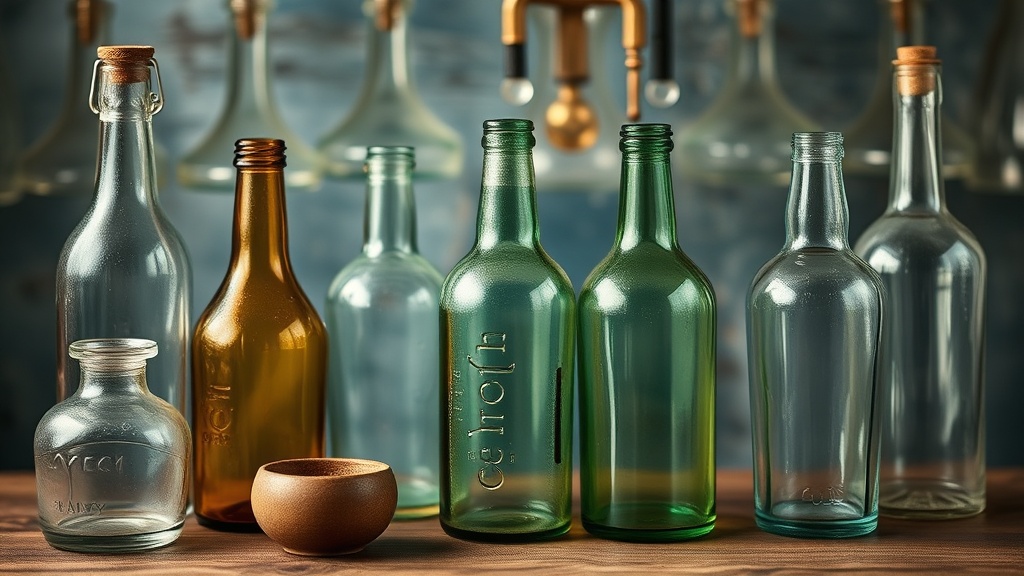
How to Clean Vintage Glass Bottles Without Destroying Their Value

A single Minneapolis quart milk bottle from the 1870s sold for $62,000 at auction in 2019—complete with original soil patina and mineral deposits intact. Had it been scrubbed with steel wool or soaked in bleach, that same bottle would have become essentially worthless. For collectors of vintage glass, knowing how to clean properly separates the preservationists from the destroyers.
This guide walks through the nuanced process of cleaning antique bottles without diminishing their historical integrity or market value. We'll examine what methods actually cause harm, how to address different contamination types based on their chemistry, and when professional conservation becomes necessary. Whether you've inherited a basement full of canning jars or you're evaluating that amber bitters bottle at an estate sale, these techniques will help you maintain—and potentially enhance—what your glass collection represents.
What Cleaning Methods Actually Damage Vintage Glass?
Collectors routinely destroy valuable bottles through ignorance rather than malice. The dishwasher stands as the single biggest culprit in domestic settings—those aggressive high temperatures, harsh alkaline detergents, and forceful water jets strip away the subtle patina that gives antique glass its character. That cloudy, rainbow-hued film collectors sometimes call "sick glass"? Often it's not original damage at all, but etching caused by previous owners who thought they were "helping" by running pieces through a sanitizing cycle.
Hand-washing with modern dish soap seems intuitively safer, yet many formulations contain moisturizers, anti-spot agents, and fragrance compounds that leave nearly invisible polymer residues. These films attract dust, complicate future cleaning, and can chemically interact with glass over extended periods. Scrubbing with abrasive pads—even "non-scratch" varieties marketed for cookware—creates microscopic surface scratches that catch light and reduce optical clarity. Those scratches also provide footholds for future staining and mineral buildup.
Even toothpaste, frequently recommended across online forums as a "gentle" polishing compound, contains mild abrasives like hydrated silica that wear down embossed lettering with repeated application. The fundamental rule remains straightforward: if you wouldn't trust a substance or tool on prescription eyeglasses, don't subject a century-old bottle to it.
Chemical cleaners present their own hazards. Bleach and ammonia-based products degrade glass at the molecular level over time, causing structural weakening that manifests as crizzling—fine internal cracking resembling a spiderweb pattern. Acetone and other solvents can dissolve original labels or painted details that contribute significantly to historical value. Vinegar, while useful in specific dilutions, is still acidic and requires careful handling and thorough rinsing.
How Do You Remove Different Types of Grime from Old Bottles?
Surface-level dirt and accumulated dust respond to the simplest treatment: lukewarm distilled water and a soft microfiber cloth worked in gentle circular motions. Distilled water matters because tap water contains dissolved minerals—calcium, magnesium, iron—that leave spotting and can contribute to long-term degradation. For interior spaces too narrow for hand access, wooden dowels wrapped in lint-free cloth prove more effective and safer than wire-handled bottle brushes that can scratch interior walls.
White film, cloudiness, and iridescent haze—phenomena collectors often term "sick glass"—typically develop from prolonged burial in alkaline soils or chemical reactions between glass and original contents. Mild cases frequently respond to patient soaking in distilled water acidified with one tablespoon of white vinegar per quart. Change the solution every 24 hours, examining the bottle under good light before deciding whether to continue. Heavy mineral deposits from hard water exposure need extended soaking in pure distilled water, sometimes continuing for several weeks with diligent water changes.
Organic residues present different challenges. Dried ink, medicinal compounds, or food remnants that have hardened over decades require chemical softening rather than physical force. Fill the affected vessel with warm distilled water and a few drops of original Dawn dish soap—the classic blue formulation without moisturizers or antibacterial additives. Allow 48 to 72 hours for the surfactant to penetrate and loosen material, gently agitating occasionally. For stubborn biological residue, a 50/50 solution of warm distilled water and standard 3% hydrogen peroxide breaks down organic compounds through oxidation without introducing acids or abrasives. Never combine cleaning agents simultaneously.
Rust stains from metal closures require specialized handling. Oxalic acid solutions can dissolve iron oxidation, but they demand rubber gloves, adequate ventilation, and extremely thorough post-treatment rinsing. For most collectors, the risk outweighs the benefit unless the bottle itself is genuinely rare and the staining significantly impacts display value.
When Should You Seek Professional Conservation Help?
Certain conditions exceed the capabilities and risk tolerance of responsible home collectors. Deeply etched "sick glass" that persists cloudy after weeks of patient soaking often indicates molecular-level deterioration rather than surface deposits. Professional conservators possess access to ion exchange resins, controlled humidity chambers, and other museum-grade stabilization techniques unavailable outside specialized facilities.
Structural damage—cracks, chips, or previous repair attempts—significantly impacts monetary value, sometimes reducing worth by 70-90% depending on severity. Counterintuitively, professional restoration attempting to disguise damage often decreases value more than honestly visible flaws. However, for genuinely rare specimens where structural failure threatens complete loss, professional intervention becomes worthwhile.
Expect to invest $100-300 for basic assessment and minor conservation work, with complex stabilization running into thousands. Research credentials through established organizations and request documentation of similar completed projects. Ethical professionals won't promise to erase damage—they'll explain stabilization options and anticipated outcomes with transparent honesty.
Building and Maintaining a Proper Cleaning Workspace
Serious collectors benefit from dedicating specific space and supplies to bottle maintenance. Essential kit components include:
- Distilled water in volume—gallon jugs purchased by the case
- Original Dawn dish soap in the classic blue formulation
- Cleaning-grade white vinegar, not culinary varieties
- Standard 3% hydrogen peroxide solution
- Lint-free microfiber cloths washed without fabric softener
- Wooden dowels in quarter-inch increments for interior access
- Silicone rubber stoppers for sealing bottles during soaking
- Soft-bristled brushes intended for baby bottles—no metal components
- Latex or nitrile gloves to protect bottles from skin oils
Maintain this inventory separately from general household cleaning supplies to prevent accidental cross-contamination.
Storing Cleaned Bottles for Long-Term Preservation
Proper storage extends the benefits of careful cleaning across decades. Ultraviolet radiation degrades glass compositionally—amethyst manganese glass gradually clarifies, amber glass lightens toward yellow. Position collections away from windows, or install UV-filtering film on unavoidable exposures.
Thermal cycling causes expansion and contraction that stress glass at weak points. Basements appeal intuitively for storage capacity but frequently suffer humidity swings promoting mold growth. Target consistent temperatures between 65-75°F with relative humidity around 45-55%. Small dehumidifiers with hygrometer monitoring maintain stable conditions worth the modest investment.
Display arrangements demand similar consideration. Museum putty, clear acrylic rings, or custom-fitted display stands secure bottles without adhesive residue. Never stack vessels vertically—even stable-appearing arrangements create weight distribution that generates micro-fractures over years.
Documentation proves as valuable as physical cleaning. Photograph each bottle from multiple angles before any treatment, capturing manufacturer's marks, damage, and labels. Maintain written records noting specific cleaning methods and observed changes. This provenance helps future owners understand exactly what they're acquiring.
For collectors seeking authoritative guidance, the Federation of Historical Bottle Collectors maintains extensive technical resources and member forums. The National Park Service's Conserve O Gram series publishes free, peer-reviewed guidance on glass conservation. For understanding manufacturer's marks and dating methodologies, the Society for Historical Archaeology's bottle reference pages remain unmatched.
Perhaps the most important principle: not every bottle requires cleaning. Some collectors specifically seek "dug" specimens with original soil patina intact as historical evidence. A nineteenth-century patent medicine bottle with faded label and dried residue might command substantially higher prices untouched than polished to commercial sparkle. When uncertainty exists, consult established expertise. The hours invested in research consistently return dividends in preserved authenticity and the uninterrupted stories your collection continues conveying across generations.