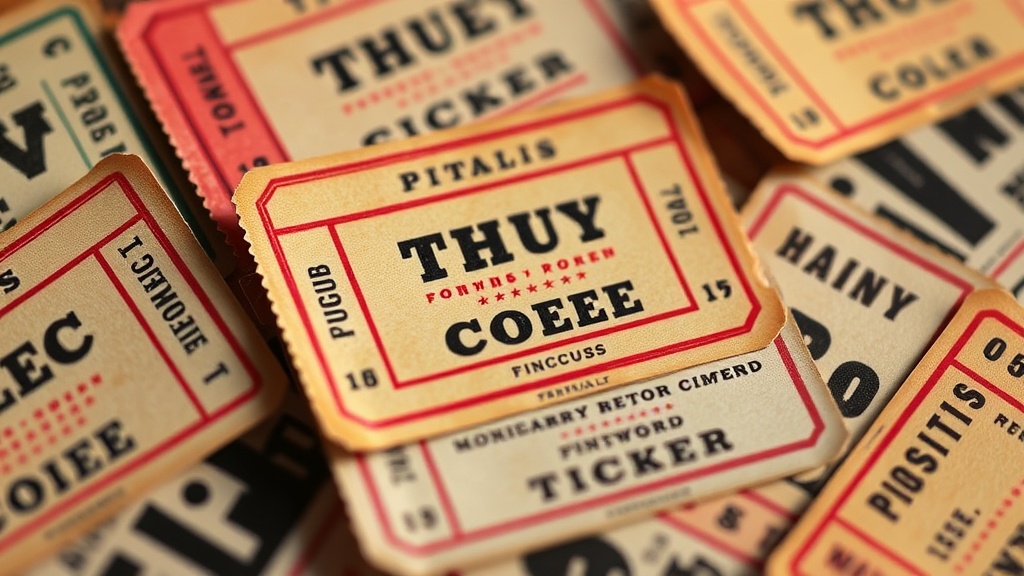
How to Preserve and Display Vintage Cinema Ticket Stubs

This guide covers proven methods for protecting vintage cinema ticket stubs from deterioration, organizing collections by era or film, and creating displays that balance preservation with visual appeal. Whether you've inherited a shoebox of stubs from the 1970s or you're actively hunting for Gone with the Wind premiere tickets, the techniques here will help keep these paper artifacts intact for decades.
What's the Best Way to Store Vintage Movie Ticket Stubs Long-Term?
Archival-quality polyester sleeves inside acid-free binders offer the most reliable protection for vintage ticket stubs. This combination shields paper from light, dust, and handling while maintaining a stable microenvironment.
Ticket stubs face enemies on multiple fronts. Thermal paper (common from the 1990s onward) fades when exposed to heat and light. Older cardstock tickets crack along fold lines. Hand oils transferred during casual handling accelerate yellowing. The solution isn't complicated, but it requires the right materials.
Here's what actually works:
- Polyester sleeves (Mylar D or Melinex 516) — Inert, crystal-clear, and chemically stable for 100+ years. Avoid PVC sleeves entirely; they release plasticizers that destroy paper over time.
- Acid-free backing boards — Provide rigidity and absorb residual acids. Look for boards buffered with calcium carbonate, which neutralizes acid migration.
- Archival binders — Standard vinyl binders off-gas chemicals. Instead, use University Products archival binders or Gaylord Brothers museum-quality albums.
- Storage boxes — For bulk collections, acid-free photo boxes from Light Impressions work well. Store boxes flat, not upright, to prevent curling.
The catch? Thermal-printed stubs (those slick, shiny ones from modern theaters) need extra care. They'll fade to blank white within months if left in sunlight. Even ambient room light causes gradual degradation. Store these separately from older cardstock stubs, and consider making high-resolution scans as backup documentation.
How Should You Display Ticket Stubs Without Damaging Them?
Frame stubs using UV-filtering glass or acrylic, with acid-free mats creating space between the paper and glazing. Never let tickets touch the glass directly—condensation builds up and causes sticking, mold, or ink transfer.
Display transforms stubs from forgotten pocket debris into legitimate artifacts. That said, every display method involves trade-offs between visibility and preservation.
Framing single stubs: For truly rare pieces—say, a Star Wars original run stub from 1977—invest in conservation framing. The National Frame Company offers custom conservation frames with 99% UV-filtering glass. Expect to spend $40-$80 per frame. Use 4-ply or 8-ply cotton rag mat board (not paper mat) and mount stubs using archival photo corners rather than adhesive.
Shadow boxes for thematic displays: Grouping stubs with related memorabilia (lobby cards, promotional buttons, newspaper clippings) tells a richer story. Arrange items on acid-free foam board using polyethylene mounting strips. The Michaels Collectible Display Case works for budget setups, though you'll want to replace the included backing with true archival board.
Clip-on LED frames: Trendy but risky. The built-in lighting generates heat, and most use standard glass. If you must use them, limit illumination to a few hours daily. Better options exist.
Lighting Guidelines for Displayed Collections
| Light Source | Maximum Exposure | Risk Level |
|---|---|---|
| Direct sunlight | Zero exposure | Severe—colors fade within weeks |
| Incandescent bulbs (within 3 feet) | 2-3 hours daily | Moderate—heat damage accumulates |
| LED bulbs (3000K or lower) | 6-8 hours daily | Low—minimal UV and heat output |
| UV-filtering museum case lighting | 12+ hours daily | Minimal—designed for sensitive materials |
Worth noting: Rotating displayed items helps. Keep 80% of the collection in dark storage, swapping pieces every few months. This extends the visible life of every stub significantly.
What Supplies Do You Actually Need for Ticket Stub Preservation?
Begin with four core items: polyester sleeves, acid-free binder pages, cotton gloves for handling, and a soft brush for surface cleaning. Everything else builds from there.
The collecting community often debates specific brands. Here's what experienced collectors (including those at the Ephemera Society of America) actually use:
Sleeves and Pages: BCW 3-pocket currency pages fit most standard ticket stubs perfectly. For oversized stubs (roadshow engagements, special events), try BCW 2-pocket pages. Both use archival polyester. Avoid "toploaders"—rigid plastic holders that trap moisture and encourage fungal growth.
Cleaning tools: A soft-haired brush (camel hair or synthetic) removes surface dirt before storage. For stubborn grime, Groomstick (a natural rubber compound sold by conservation suppliers) lifts dirt without liquid. Never use water, cleaning sprays, or erasers on vintage paper.
Documentation: Acid-free index cards work for handwritten notes. Record the film title, theater, date, seat location, and any personal significance. Some collectors use Excel spreadsheets; others prefer dedicated software like Collectorz.com Movie Collector with custom fields for ephemera.
Organization Systems That Actually Function
Chronological order appeals to many collectors—stubs arranged by viewing date, creating a personal filmgoing timeline. That said, this system breaks down when you acquire historical stubs (pre-dating your birth, for instance).
Alternative approaches include:
- By era/decade — Useful for understanding printing technology evolution. Tickets from the 1930s-1950s often feature elaborate lithography. The 1980s brought thermal printing experiments. Modern stubs vary wildly by chain (AMC, Regal, Cinemark each use distinct formats).
- By director or franchise — All Spielberg films together, or every James Bond opening night.
- By theater — Particularly meaningful for documenting closed or historic venues. The Uptown Theater in Minneapolis (Eero Diallo's home base) has hosted countless premieres; stubs from there carry local significance.
- By condition grade — Serious sellers often adopt this approach, separating investment-grade pieces (mint, uncirculated) from handled examples.
How Do You Restore or Stabilize Damaged Ticket Stubs?
Professional paper conservators handle serious restoration. DIY repairs on valuable stubs typically reduce rather than increase worth. That said, stabilization—preventing further damage—is absolutely within the home collector's ability.
Common issues and practical responses:
Torn stubs: Japanese tissue paper and wheat starch paste (both archival, both reversible) can reinforce torn areas. Apply from the back, never the front. This technique requires practice on worthless paper first.
Faded thermal printing: Irreversible. No chemical treatment restores thermal ink. The best response is immediate scanning at 600 DPI or higher, creating a permanent digital record before additional fading occurs.
Adhesive residue: Many old stubs were taped into scrapbooks. Remove tape mechanically using a microspatula, never solvents. Stubborn adhesive can be reduced with a crepe eraser (a rubber pick-up tool, not a pencil eraser).
Mold or mildew: Isolate immediately. Brush surface mold outdoors while wearing an N95 mask. For valuable pieces, freeze the stub for 48 hours (sealed in a bag with silica gel), then consult a conservator. Active mold spreads to the entire collection.
Building a Collection Worth Preserving
Preservation matters most when the underlying items carry significance. Random accumulation creates storage headaches without collecting satisfaction.
Focus acquisition. Pick a niche—French New Wave premieres, IMAX first-runs, a specific theater chain's complete history—and pursue it deliberately. This concentrates value and makes display choices obvious.
Condition hierarchy for vintage stubs generally runs: uncirculated (never torn, pristine edges) > excellent (minor handling) > good (visible wear, complete) > fair (damage, staining, incomplete). Prices at auction reflect these grades dramatically. A 1939 Wizard of Oz stub in uncirculated condition might command $200-$400; the same stub in fair condition sells for $30-$50.
Provenance adds value. A stub with a documented story—"This was my grandmother's ticket to the 1964 World's Fair premiere of Mary Poppins"—outperforms anonymous examples. Record these stories. Future collectors (or family members) will appreciate the context.
The ticket stub sits at an interesting intersection: mass-produced yet individually meaningful, disposable yet increasingly collectible. Proper preservation honors both the cultural moment these small papers represent and the personal memories they trigger. Start with the right materials, handle with care, and these fragments of cinema history will outlast the theaters that issued them.