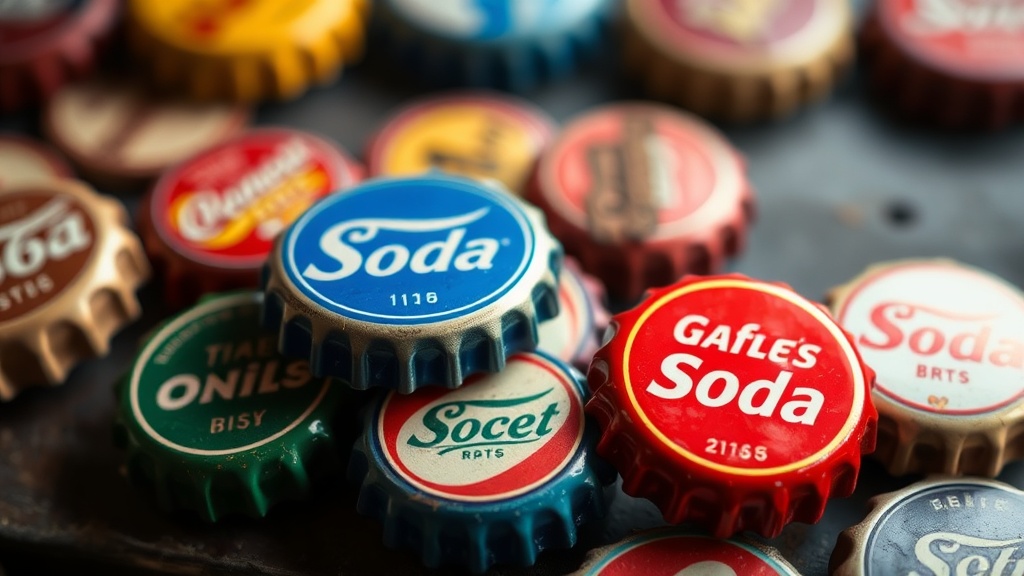
Identifying Authentic Vintage Soda Bottle Caps

A collector in Ohio recently spent three hundred dollars on what he thought was a rare 1950s Coca-Cola metal cap, only to realize it was a modern reproduction with a weathered finish. This post looks at the specific physical markers, metallurgical traits, and design nuances that separate a true vintage soda bottle cap from a high-quality fake. Understanding these details is the only way to protect your investment in the collectibles market.
How Do I Spot a Fake Vintage Bottle Cap?
You identify a fake by looking for inconsistencies in the metal thickness, the printing method, and the underside texture. Most authentic vintage caps—especially those from the mid-20th century—show specific signs of aging that are difficult to replicate without looking artificial. A real vintage piece won't look "perfectly" weathered; it will show genuine oxidation or wear patterns that follow the physics of a bottle opening.
Start with the weight. Modern reproductions often use thinner, lighter aluminum or cheap tin-plated steel that feels flimsy in your hand. Authentic mid-century caps often have a certain heft to them. If you hold a cap and it feels suspiciously light or the edges feel overly sharp and uniform, be skeptical.
The printing process is another huge giveaway. Many high-end fakes use modern digital printing, which creates a smooth, pixelated look when viewed under a magnifying glass. Real vintage caps were typically printed using lithography or offset processes. This means the ink often has a slight depth or a very subtle texture to it. If the colors look too vibrant or "neon" compared to historical references, it's a red flag.
Check the "teeth" or the crimping edge. On a genuine old cap, the serrated edges might show slight irregularities from the manufacturing process of that era. Modern machines are much more precise. If every single tooth on the rim is identical to a micron, you're likely looking at a modern piece.
Don't forget to look at the underside. A truly old cap might have a slight patina or a dullness to the metal that isn't just surface dirt. If the underside is perfectly shiny and bright, it hasn't seen much time in a drawer or a cellar. It's likely a recent creation. For more on the history of these items, the Wikipedia entry on bottle caps provides a solid baseline for manufacturing eras.
What Are the Signs of Genuine Age?
Genuine age is signaled by natural oxidation, subtle metal fatigue, and specific types of patina that cannot be easily faked with chemicals.
When collectors talk about "patina," they aren't just talking about dirt. They're talking about how the metal has reacted with the environment over decades. If you see a reddish tint on a steel cap, that's iron oxide (rust). However, a "fake" patina often looks painted on. If you see a patch of rust that looks suspiciously uniform or sits on top of a very clean surface, it's a fake. Real rust often eats into the metal slightly, creating a texture.
The way the ink has aged is also telling. In the 1940s and 50s, certain pigments reacted differently to light and air. You might see slight fading on one side of the cap if it was displayed in a shop window, or a slight "cracking" in the ink that occurs over decades of thermal expansion and contraction. This isn't a flaw; it's a hallmark of age.
Here is a quick checklist for your next hunt:
- The Smell Test: Old metal often has a distinct, slightly metallic or musty scent. A brand-new reproduction will smell like nothing or, if it was chemically aged, might smell like harsh solvents.
- The Edge Profile: Check the crimping. Vintage machines had more "character" in their output.
- The Weight: Heavier is usually better for older steel-based caps.
- The Graphics: Look for "bleeding" or slight ink imperfections common in older lithography.
If you're already building a collection of soda-related items, you might find our guide on rare prop bottles and vintage soda caps helpful for expanding your knowledge of high-value pieces.
How Much Is a Rare Vintage Soda Cap Worth?
The value of a vintage soda cap depends entirely on its rarity, the condition of the graphics, and the current demand from specialized collectors. There is no single price list, but certain brands and eras command much higher prices than others.
A standard, common soda cap from a local brand might only fetch a few dollars. However, a highly sought-after brand like Coca-Cola, Pepsi, or even defunct regional brands can go for much more. The "condition" is the most volatile factor. A "near mint" cap with zero scratches and vibrant colors is worth significantly more than a "circulated" cap with heavy rust or faded graphics.
The following table shows a general hierarchy of value based on common collector observations:
| Type of Cap | Typical Condition | Estimated Value Tier |
|---|---|---|
| Common Brand (Local) | Used/Circulated | Low ($1 - $5) |
| National Brand (Standard) | Good/Clean | Mid ($10 - $30) |
| Rare/Defunct Brand | Near Mint | High ($50 - $150+) |
| Error/Misprint Caps | Any | Premium ($100+) |
Errors are the "holy grail" for many in this niche. A cap with a misspelled word or a misaligned logo is often a mistake from the factory. These are rare and highly coveted. If you find a cap where the logo is slightly off-center or the color is a different shade than the standard, don't toss it. It might be a documented error that collectors are hunting for.
Keep in mind that the market fluctuates. What's worth fifty dollars today might be worth twenty next year if a new way to mass-produce "vintage-look" replicas hits the market. Always research the specific brand's history through official archives or reputable collector forums before assuming a high price tag.
Common Pitfalls for New Collectors
The biggest mistake is assuming a "weathered" look means an item is old. Modern manufacturers have mastered the art of "distressing" items to make them look antique. This is often done using acid baths or sandpaper to create a fake patina.
Another pitfall is ignoring the "feel" of the metal. If you are buying at a flea market or an estate sale, touch the item. If it feels like thin, flimsy aluminum, it's likely not a mid-century steel cap. Most collectors prefer the weight of steel for that era.
It's also easy to get caught up in the aesthetics and forget the history. A beautiful, shiny cap might look great on a shelf, but if it's a modern reproduction, it has no historical value. Always verify the brand and the era before investing heavily. If you're interested in other types of memorabilia, you might also enjoy our look at rare cinema tickets to see how different collectible markets operate.
If you find a piece that looks suspicious, try to find a "control" sample. Look up high-resolution images of verified authentic caps from the same era on auction sites or museum archives. Compare the two side-by-side. If the spacing of the teeth or the font thickness doesn't match, you have your answer.
Collecting is about the details. It's the small things—the way the light hits the ink, the weight in your palm, the slight imperfection in the crimp—that tell the real story. Don't settle for the easy answer. Dig deeper into the metal and the history behind it.